EN

A custom rg cable order often seems straightforward on the surface, but engineering pitfalls quickly emerge during first-article inspection. A length measured from an improper datum point, an unverified connector interface, or a omitted RF sweep test specification can transform a high-performance RF design into an expensive, delayed integration line stopper. For B2B procurement managers and systems engineers, purchasing a custom rg cable is not merely a matter of ordering coaxial cable by the meter. The primary objective is to define an RF cable assembly that arrives electrically validated, mechanically durable, and fully compliant with system documentation.
When sourcing specialized RF interconnects for telecom infrastructure, defense equipment, or industrial automation, factors such as lead time, lot-level traceability, and batch-to-batch phase consistency are as important as unit pricing. A complete Request for Quotation (RFQ) exposes technical bottlenecks before mass production starts. This engineering discipline becomes critical when a project integrates long low-loss feeder lines, flexible cabinet jumpers, and diverse connector types into a single system architecture.
Signal Path Definition: Beyond RG Family Designations
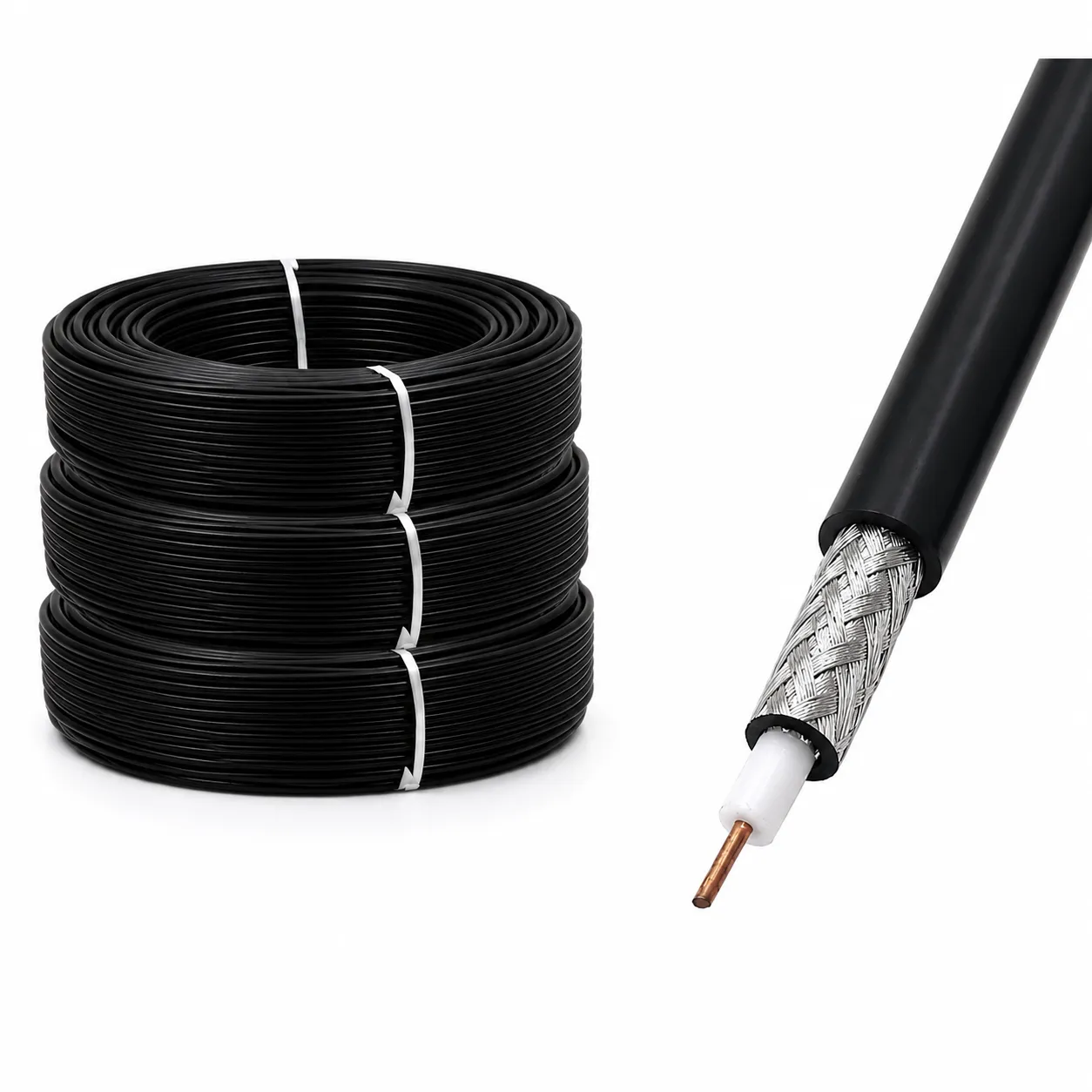
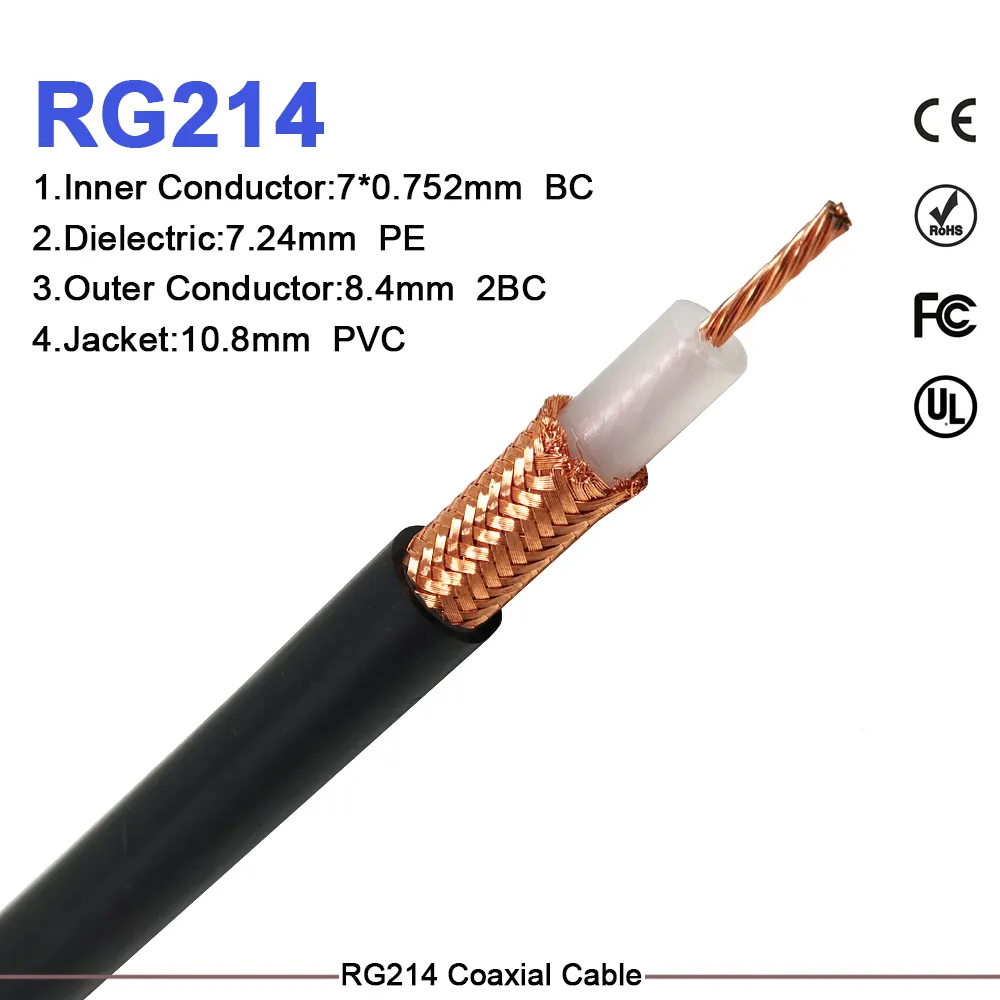
While legacy "Radio Guide" designations provide a useful baseline, an rg 213 specs sheet or coax rg 58 label alone does not constitute a complete engineering specification. Physical construction, shielding coverage, and dielectric materials vary across manufacturers.
-
Evaluating Heavy-Duty Cables: rg 213 specs traditionally describe a 50-ohm, solid polyethylene (PE) dielectric cable engineered for high-power handling. However, exact attenuation curves, jacket flame ratings, braid coverage percentages, and operating temperature tolerances must be verified against the manufacturer's official dataset before specifying an rg 213 specs build.
-
Evaluating Flexible Interconnects: A standard coax rg 58 is used for flexible 50-ohm interconnects, but the exact coax rg 58 dielectric variant (solid PE vs. stranded foam) dictates the cable's insertion loss, power threshold, and minimum dynamic bend radius.
-
Evaluating High-Impedance Lines: A video or broadband link specifying rg 11 u requires explicit clarification, as rg 11 u represents a 75-ohm cable architecture. Applying an rg 11 u specification without verifying impedance leads to mismatch reflections in 50-ohm RF equipment.
To build a reliable custom rg cable, engineering teams must evaluate the full signal path: operating frequency range, nominal impedance, maximum allowable insertion loss, maximum RF input power, physical installation constraints, and connector mating specifications.
| Cable Type | Nominal Impedance | Primary Dielectric | Outer Diameter (Nominal) | Typical Attenuation at 1 GHz | Key Application Focus |
| RG 213 | 50 Ohms | Solid Polyethylene (PE) | 10.30 mm (0.405 in) | ~23 dB / 100 meters | Heavy feeder runs, high power handling, outdoor towers |
| COAX RG 58 | 50 Ohms | PE or Foamed PE | 4.95 mm (0.195 in) | ~52 dB / 100 meters | Flexible jumpers, internal cabinet routing, mobile radio |
| RG 11 U | 75 Ohms | Foamed Polyethylene | 10.30 mm (0.405 in) | ~15 dB / 100 meters | Long-distance 75-ohm video lines, broadband distribution |
Technical Specification & Control Checklist
Before submitting a custom rg cable RFQ, release a controlled assembly drawing. At a minimum, your engineering drawing must define the following parameters:
-
Cable Substrate Selection: Specify the exact manufacturer-approved cable part number or cross-referenced equivalent. Clarify whether an rg 213 specs baseline, a flexible coax rg 58 construction, or a 75-ohm rg 11 u structure is required, along with jacket flame ratings (e.g., LSZH, Plenum CMP).
-
Length Datum & Tolerances: Define finished assembly overall length (OAL) with acceptable engineering tolerances (e.g., ±5 mm). Clearly identify reference points: connector-end to connector-end, ferrule-to-ferrule, or center-contact reference planes.
-
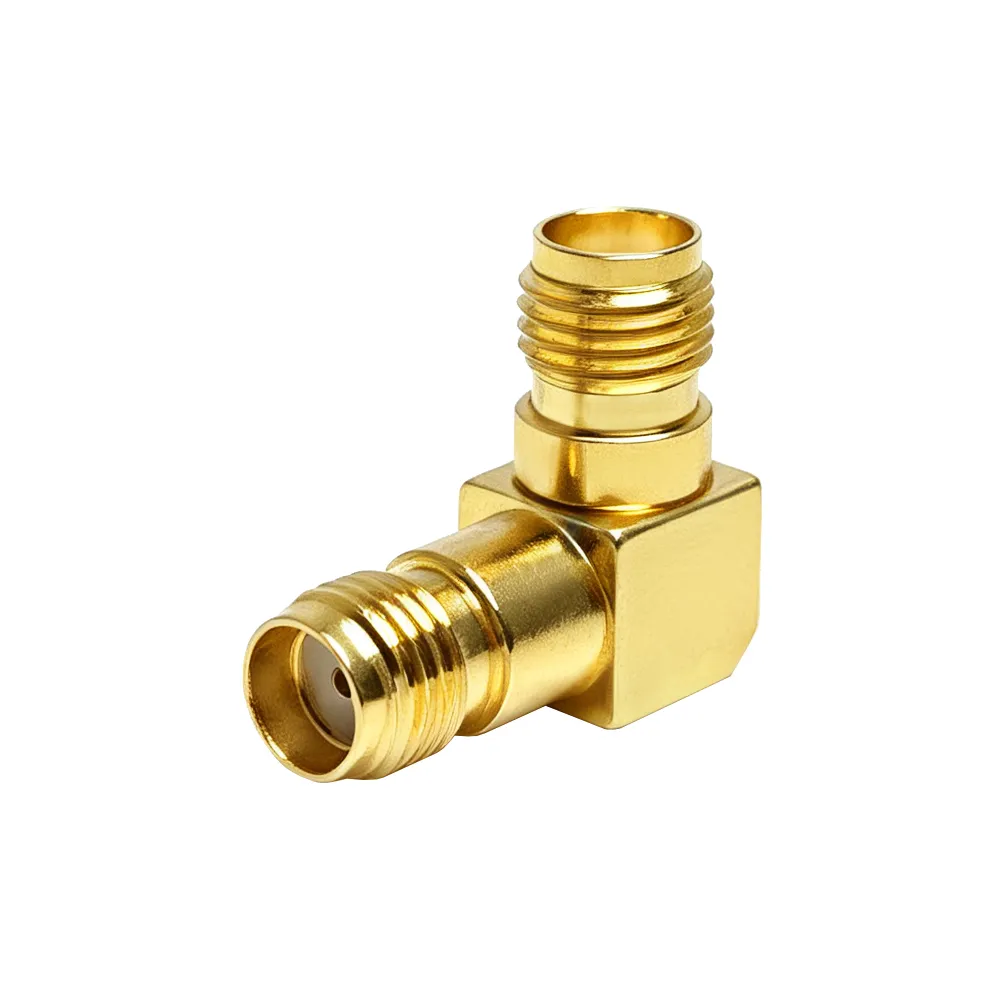
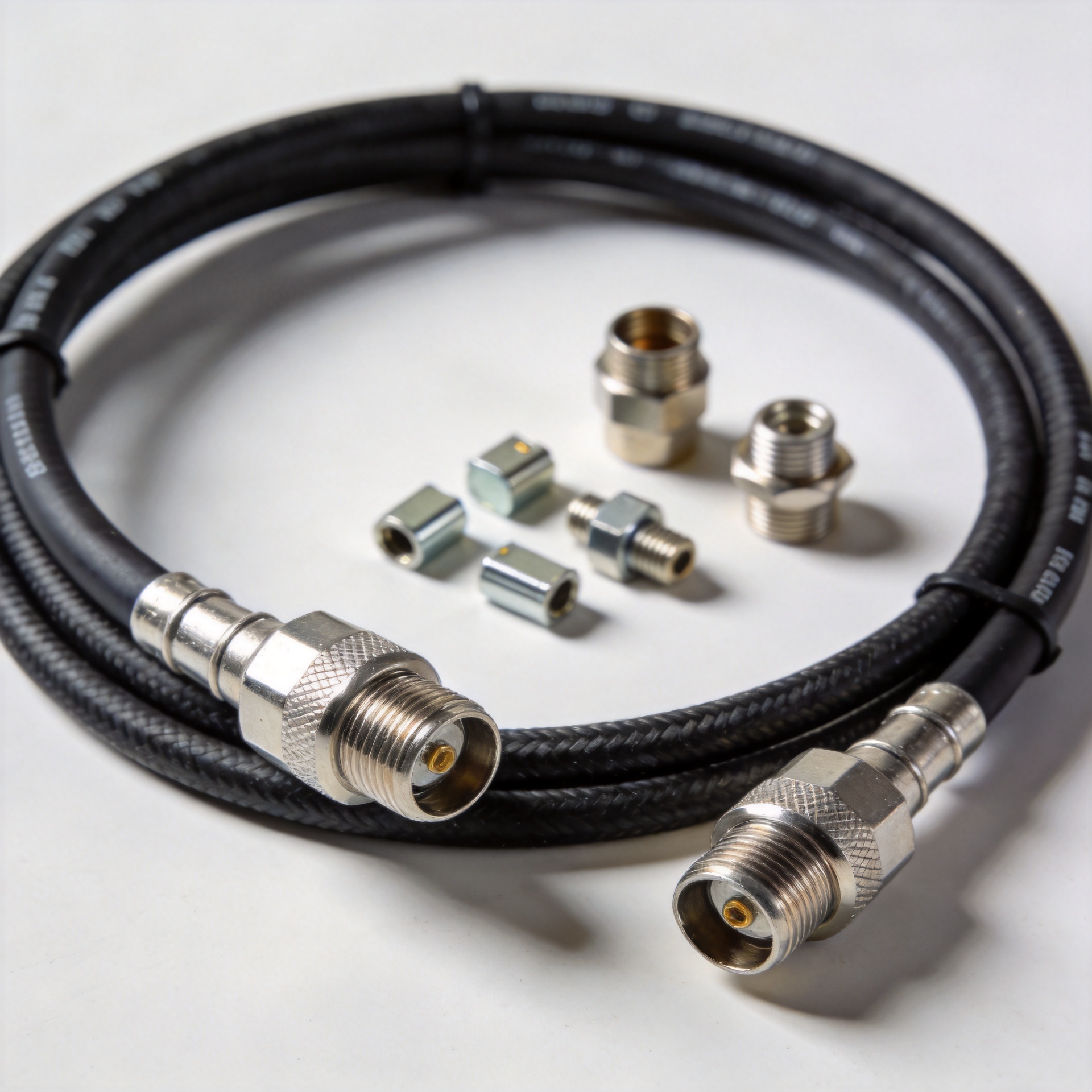
Connector Configurations: State exact interface standard (SMA, N-Type, BNC, TNC), gender, contact plating (gold/silver thickness), body plating (tri-metal/nickel), geometry (straight vs. right-angle), and mounting style (bulkhead, panel mount, or inline).
-
Electrical Limits & RF Testing: Specify frequency bandwidth, maximum VSWR (Return Loss), insertion loss thresholds, continuous RF power ratings, and phase matching or delay requirements.
-
Mechanical & Environmental Endurance: Document minimum dynamic and static bend radii, connector retention pull-force thresholds, ingress protection (IP67/IP68), and operating temperature ranges (-40°C to +85°C).
-
Quality Documentation & Compliance: Detail required quality deliverables, including revision-controlled Bill of Materials (BOM), First Article Inspection (FAI) reports, IPC/WHMA-A-620 workmanship standards, and Certificates of Conformance (CoC).
Manufacturer Qualification & Quality Control Standards
Evaluating a custom rg cable manufacturer requires examining their internal process controls rather than relying solely on headline marketing claims. Key manufacturing quality checkpoints include:
-
Automated Stripping & Braid Processing: Confirm the supplier utilizes precision rotary stripping equipment to maintain braid and dielectric dimensions without nicking the center conductor.
-
Calibrated Crimp & Solder Verification: Verify crimp tooling is calibrated to exact manufacturer die dimensions. Solder joints must comply with IPC-J-STD-001 or IPC/WHMA-A-620 Class 3 standards.
-
Controlled RF Testing Equipment: Ensure final test stations utilize calibrated Vector Network Analyzers (VNAs) to perform 100% automated VSWR and insertion loss sweeps over the entire operating spectrum.
-
ISO Quality Flowdown: Confirm the factory operates under active ISO 9001 quality management systems, with full lot traceability from raw coaxial reel to finished assembly.
Capacity should also be systematically evaluated. Differentiate between engineering prototype lead times and volume production capacity. Request line items for engineering review, prototype build, FAI approval, material procurement, mass assembly, and final QA release to create a transparent production schedule.
Acceptance Planning & First Article Approval
Engineering samples serve as a key quality gate for new custom rg cable designs. When approving a first article, the sample evaluation package must include the released drawing revision, raw material certificates, dimension records, and VNA test sweeps.
Define an acceptance test plan based on system risk:
-
100% Production Testing: Visual inspection, mechanical dimension checks, pin-depth verification, electrical continuity, and DC resistance testing should be performed on every assembly.
-
RF Parameter Sweeps: High-frequency applications require 100% VSWR and insertion loss testing, with serialized test records attached to each shipping lot.
-
Lot-Based Destructive Testing: Pull-strength tests, crimp height cross-sectioning, and thermal shock cycling should be performed on lot samples during initial setup.
System designs referencing specialized compact jumpers can review the
Consolidating RF Sourcing & Documentation
To streamline procurement, keep all technical requirements in a single controlled documentation package. The custom rg cable drawing, the custom rg cable length tolerances, and the custom rg cable test limits must be linked directly to the purchase order revision.
When referencing an rg 213 specs cable, attach the explicit rg 213 specs datasheet to the RFQ package rather than using generic terminology. Re-evaluate your rg 213 specs selection if thermal exposure or routing constraints change. When deploying a coax rg 58 jumper, verify that the coax rg 58 attenuation profile supports your system's link budget. Finally, when an rg 11 u cable is required, confirm that the 75-ohm rg 11 u impedance matches the system architecture before releasing production orders.
By establishing a closed-loop sourcing process—defining the signal path, locking drawing revisions, validating FAI samples, and enforcing 100% VNA testing—engineering and procurement teams ensure every custom rg cable delivers predictable electrical performance and long-term mechanical reliability.