EN

Integrating RF Connector Suppliers into Antenna Feed Systems: Supply Chain & Engineering Synergy
Designing high-performance communication architecture requires seamless collaboration between internal engineering design teams and specialized RF connector suppliers. Within modern wireless infrastructure, radar telemetry, and satellite broadcasting arrays, the antenna feed system serves as the critical transmission pathway determining signal fidelity and system efficiency. Engaging with reputable RF connector suppliers early in the development lifecycle prevents costly component mismatches, reduces phase errors, and streamlines the integration of robust WORLDPEAK RF solutions into complex sub-assemblies.
Navigating the intricacies of high-frequency signal distribution demands a thorough understanding of both electrical performance metrics and logistical supply chain dynamics. As networks scale to support higher data throughput and millimeter-wave frequencies, the selection of transmission line hardware becomes a foundational pillar of project success. This comprehensive guide explores how engineering organizations can effectively integrate specialized RF connector suppliers into their development pipelines while maintaining strict control over quality, cost, and delivery schedules.
Evaluating Engineering Capabilities and Manufacturing Standards
Selecting the right vendor for custom or standard RF interfaces goes beyond mere unit-cost evaluation. Engineering teams must rigorously audit potential RF connector suppliers based on their internal technical competencies, prototyping agility, and compliance with international manufacturing benchmarks such as ISO 9001 and IATF 16949.
-
Material Traceability & Metallurgy: Top-tier suppliers utilize high-grade brass, beryllium copper, or stainless steel bodies plated with corrosion-resistant layers (such as gold, nickel, or tri-metal/white bronze) to withstand harsh environmental exposures.
-
Precision Machining Tolerances: Tight dimensional control over internal pins and dielectric insulators guarantees consistent characteristic impedance (50-ohm or 75-ohm systems) across mass-produced units.
-
Testing Infrastructure: Suppliers must maintain advanced vector network analyzers (VNAs) to verify return loss, insertion loss, and Voltage Standing Wave Ratio (VSWR) up to high microwave frequencies.
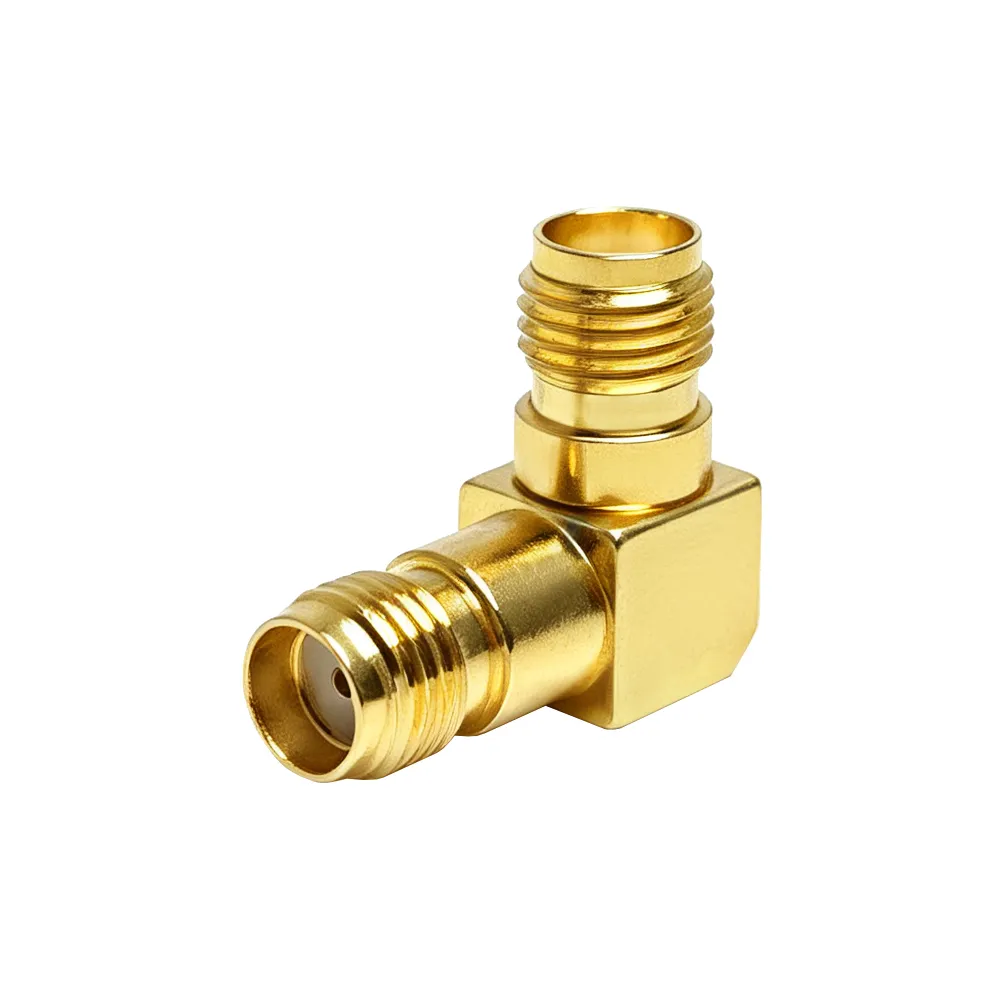
Establishing this technical alignment ensures that every component incorporated into your antenna feed systems functions reliably under extreme thermal and mechanical stress. Furthermore, evaluating a supplier's internal research and development capacity allows engineering teams to co-create custom adapter designs when standard catalog items fail to meet unique spatial or frequency constraints.
Strategic Supply Chain Framework for RF Components
Managing the logistics and procurement lifecycle for high-frequency hardware demands a proactive strategy. Fragmented supply chains often lead to extended lead times, batch-to-batch quality variances, and project delays. Integrating reliable RF components supply chain practices helps stabilize production schedules and protects profit margins across large-scale deployments.
The table below outlines a comparative framework for evaluating procurement strategies when sourcing hardware for critical antenna feed systems.
| Procurement Strategy | Primary Advantage | Potential Risk | Best Suited For |
| Single-Source Partnering | Deep technical collaboration, custom tooling optimization, priority allocation | Supply chain vulnerability if vendor faces operational disruption | Mission-critical aerospace and defense projects |
| Multi-Sourced Vendor Base | Price competitiveness, minimized risk of localized stockouts | Inconsistent mechanical tolerances, calibration variance across batches | High-volume commercial consumer hardware |
| Direct Manufacturer Direct (ODM/OEM) | Eliminates middleman markups, direct access to engineering expertise | Longer initial qualification and factory audit lead times | Scaled telecommunication infrastructure rollouts |
By partnering directly with established manufacturers like WORLDPEAK, organizations bridge the gap between custom engineering specifications and stable, long-term mass production schedules. Maintaining direct communication lines with factory floor engineers also minimizes misinterpretations regarding plating thickness, dielectric constants, and torque specifications.
Key Integration Challenges in High-Frequency Feed Networks
Deploying connectors within multi-port antenna feed networks exposes several engineering hurdles that require close cooperation with your chosen RF connector suppliers.
-
Intermodulation Distortion (PIM): Poorly mated surfaces or substandard plating can generate passive intermodulation, severely degrading receiver sensitivity in multi-carrier cellular base stations. Advanced suppliers mitigate this through strict torque control and non-magnetic plating options.
-
Thermal Expansion Mismatch: Differences in thermal expansion coefficients between coaxial cables, connectors, and PCB substrates can crack solder joints during extreme temperature fluctuations. Selecting components engineered for wide thermal ranges ensures structural integrity.
-
Assembly Scalability: Designing components that accommodate automated soldering or quick-lock mechanisms (such as QMA or TNC push-pull variants) accelerates manufacturing throughput without sacrificing high-frequency performance.
Addressing these technical obstacles during the initial schematic review phase prevents catastrophic failures during environmental qualification testing. Collaborating closely with experienced application engineers ensures that the selected connectors harmonize with the broader electrical and mechanical ecosystem of the antenna assembly.
Implementing Quality Control Protocols in Co-Development
Successful integration relies on establishing clear quality control (QC) gates shared between the OEM and the component vendor. Collaborative design reviews should cover mechanical mating cycles, environmental sealing ratings (such as IP67/IP68 waterproof compliance), and frequency range validation.
When deploying WORLDPEAK RF solutions, engineering teams gain access to transparent factory testing data, ensuring that every component matches simulation models before physical prototyping begins. Integrating these verification steps directly into your internal workflow eliminates downstream surprises and guarantees maximum uptime for field-deployed antenna feed systems. Regular factory audits and incoming material inspections further reinforce the reliability of your overarching RF components supply chain, ensuring that sub-tier material variations never compromise final product integrity.
Conclusion
Deepening the integration between engineering workflows and experienced RF connector suppliers transforms passive procurement into a strategic competitive advantage. By focusing on stringent manufacturing standards, resilient supply chain frameworks, and proactive risk mitigation, organizations can optimize the performance of their antenna feed systems from prototype to full-scale deployment. Explore our broader architectural insights and structural components on our main