EN

Outdoor RG Coaxial Cable: Weather-Resistant Options
An outdoor rg cable decision is not simply a choice between a black jacket and an indoor cable. As an RF systems engineer, I start by tracing the entire signal path: equipment impedance, operating band, route length, bend points, connector interfaces, and exposure to sunlight or water. That order prevents a common mistake—choosing an outdoor-looking cable first and discovering later that its impedance or connector family does not fit the system.
For most installations, the useful question is: which outdoor rg cable construction matches the electrical job and will still remain serviceable after seasons of UV, moisture, temperature changes, and handling? The answer may be RG6 for a 75-ohm video or CATV-style run, or a 50-ohm RG family for RF equipment. The weather-resistant cable and the weatherproof installation must be specified together.
Start with impedance: 50 ohms versus 75 ohms
Characteristic impedance should be decided before cable diameter, shielding, or color. A 50-ohm signal chain normally calls for a 50-ohm outdoor rg cable; a 75-ohm video, broadcast, CATV, or satellite-style chain normally calls for a 75-ohm cable such as RG6 where that construction fits the application. Mixing cable and equipment impedance can create reflections and reduce the margin a system needs, particularly as frequency and run length increase.
No RG model is appropriate for every installation. If the primary constraint is a 75-ohm distribution system, RG6 is often the practical starting point. If the route belongs to a 50-ohm radio, antenna, test, or control system, compare 50-ohm constructions instead. Confirm the actual supplier datasheet and connector compatibility; the RG label alone does not prove every construction detail, environmental rating, or frequency limit.
How common RG families fit an outdoor cable plan
| RG family | Typical selection role | Outdoor planning note |
|---|---|---|
| RG6 | Often considered for 75-ohm video, CATV, satellite, and broadband-style routes. | Look for a UV-resistant jacket and, where needed, an explicitly rated direct-burial construction. |
| RG58 / rg58u | A common 50-ohm flexible starting point for lower-power RF and general radio connections. | Use only an outdoor-rated version; an indoor PVC version and exposed connector pair can become the weak link. |
| RG174 | Small, flexible 50-ohm cable for compact equipment or short pigtails. | Its small diameter helps routing but may not be the right choice for a long exposed run with demanding loss or durability needs. |
| RG213 | A larger 50-ohm option considered when a more robust, lower-loss-feeling route is needed. | Plan bend radius, cable support, and connector strain relief before installation. |
| RG316 | A compact, high-temperature-oriented 50-ohm family often used inside equipment and short assemblies. | Do not assume a compact internal-cable construction is automatically suitable for continuous sunlight or wet exposure. |
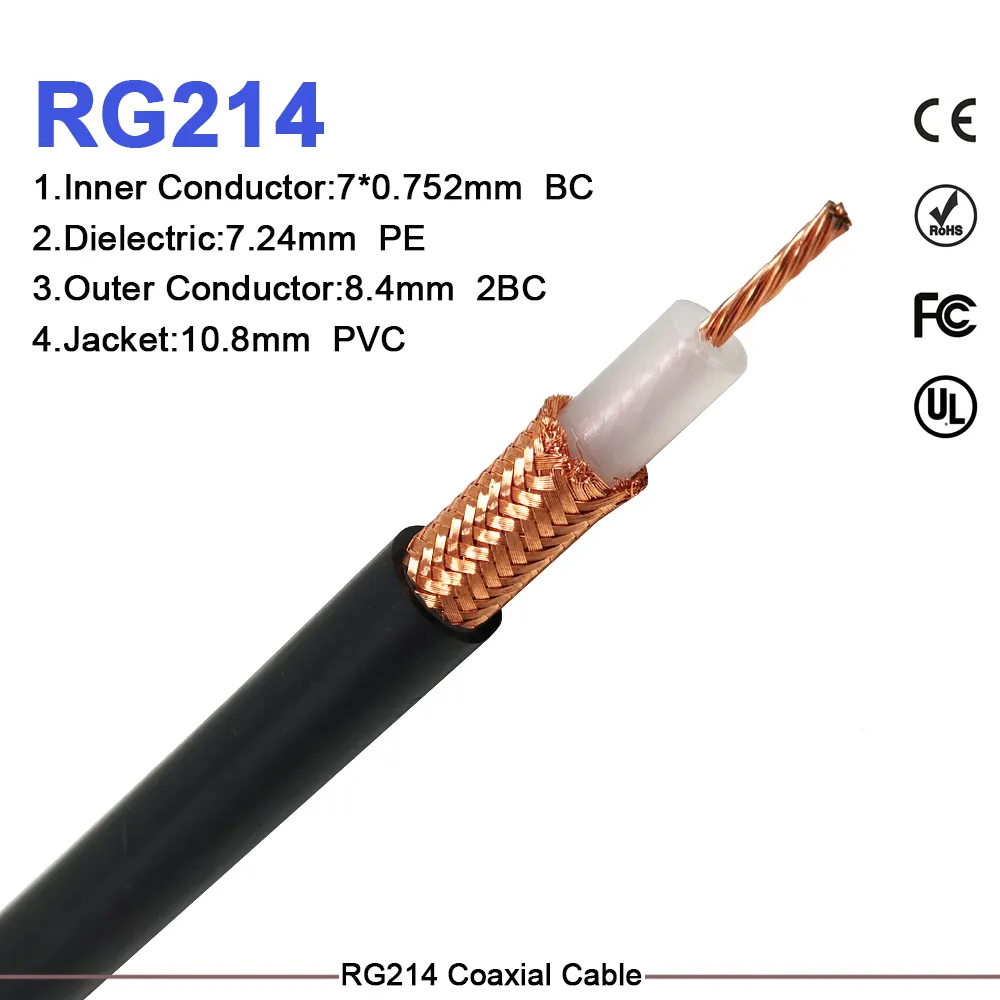
| rg 214 coax | A 50-ohm family often evaluated where shielding robustness is important. | Check the exact jacket, outer braid, connector, and environmental requirements rather than selecting by name alone. |
For example, a request mentioning belden rg 58 should still be translated into an application checklist: required impedance, route length, exposed versus protected routing, connector type, and the exact product’s jacket rating. A brand or familiar designation is a starting point for verification, not a substitute for the specification.
What makes an outdoor RG cable weather-resistant?
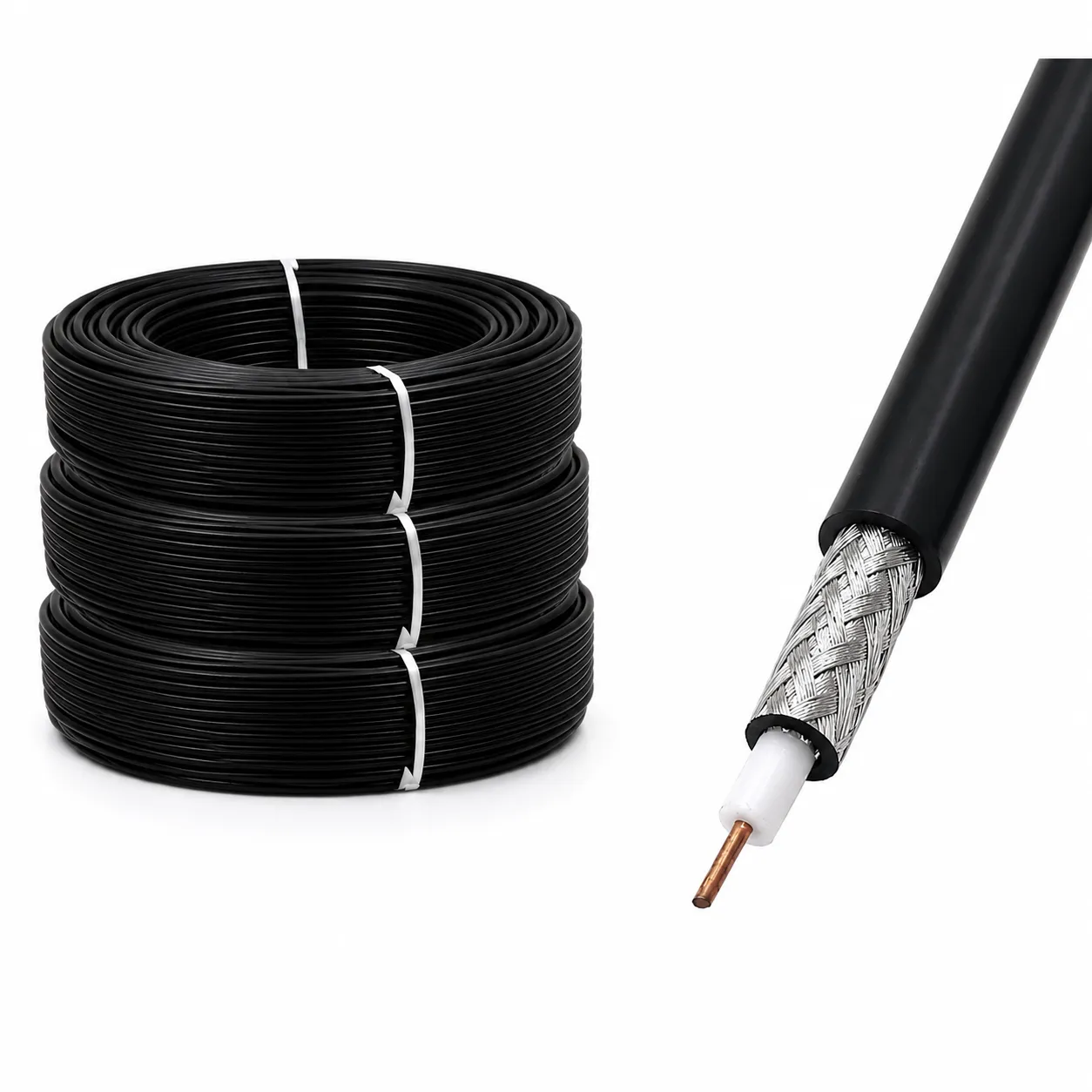
A capable outdoor rg cable needs more than a jacket that looks durable. Specify the exposure conditions first: direct sun, standing water, condensation, salt air, vibration, temperature cycling, conduit, or burial. A UV-resistant outer jacket helps the cable resist sunlight exposure; a direct-burial rating, when required, addresses a different installation condition. If a run is protected inside suitable conduit, the cable may face a different risk profile than one tied to a mast.
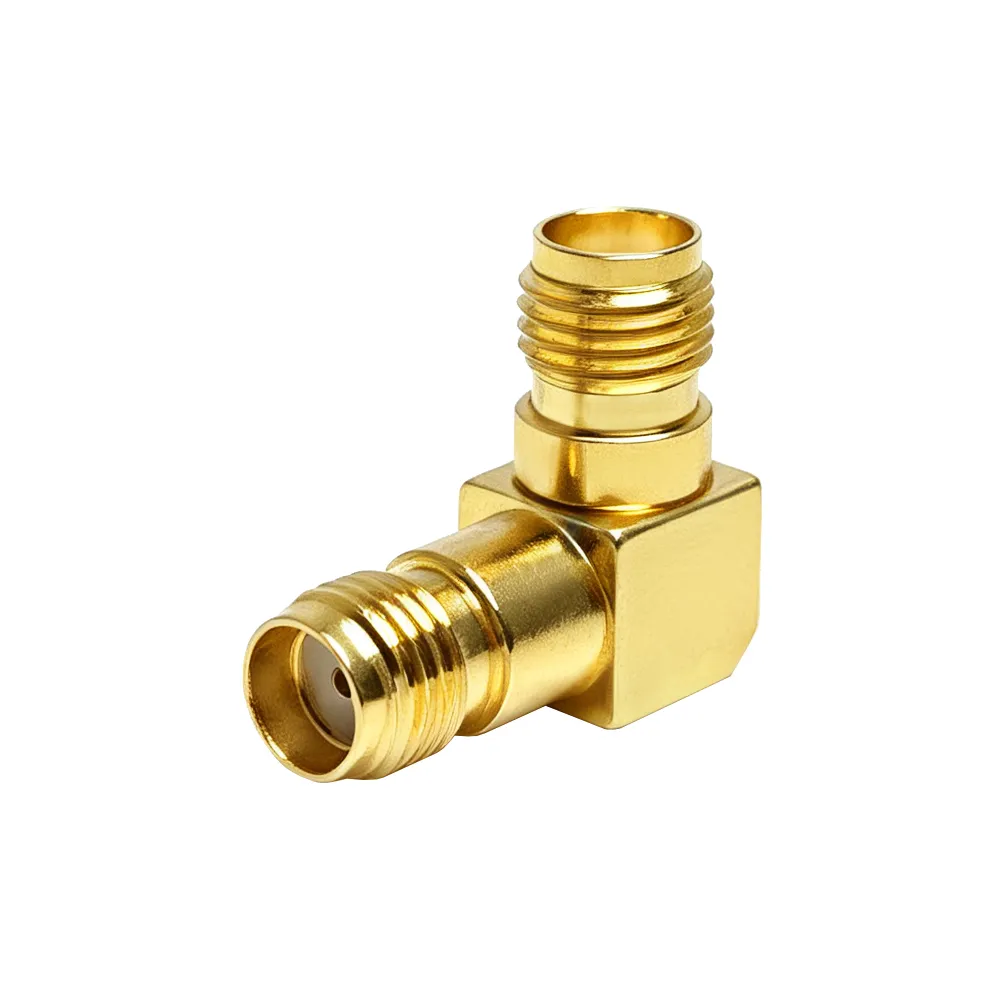
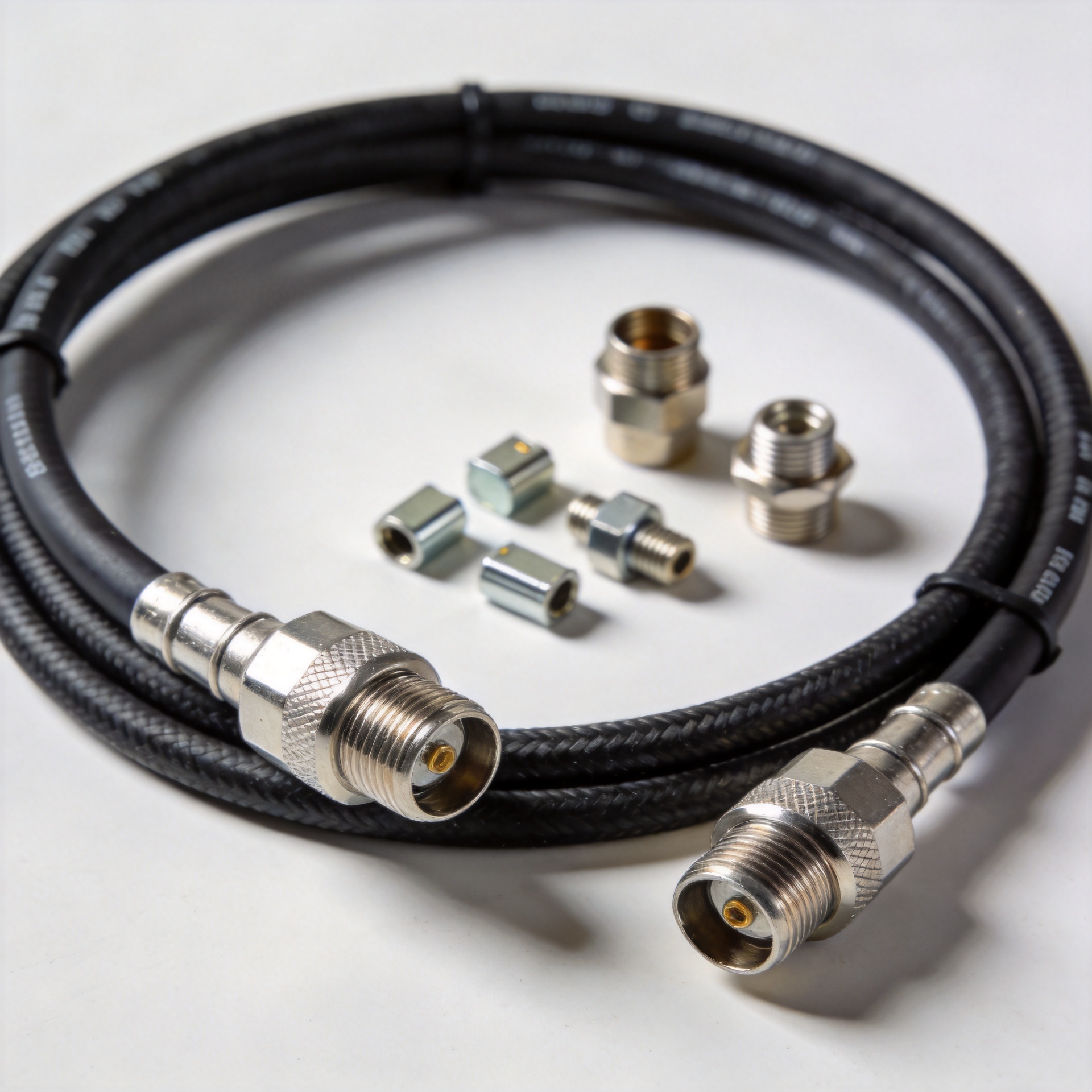
Actually, cable-jacket protection is only half the job. Moisture ingress frequently begins at a connector interface, transition, splice, or damaged jacket. Use compatible connectors, keep the cable’s bend radius, add strain relief, and select a weatherproof enclosure or sealing method appropriate to the system. Avoid routing that traps water against a connection point, and leave a drip loop where routing permits. After severe weather or the first seasonal cycle, inspect exposed terminations and cable supports.
Specify custom length, connector, and jacket as one assembly
Custom cable assemblies can reduce field terminations and avoid excess loops that collect water or create unnecessary bend stress. Define the finished length from actual route measurements, including service slack and the routing path—not only the straight-line distance. Then identify both connector ends, gender or polarity, interface family, attachment method, and any required protective boot.
For a 50-ohm assembly, the Worldpeak RG196 50-Ohm Coaxial Cable: Engineering Data & Selection Guide is a relevant internal resource for comparing a confirmed 50-ohm cable option. Where a pre-terminated format better fits the routing plan, review the Worldpeak RG405 Pre-Terminated Cable Assembly as a confirmed assembly reference. These links identify available product resources; final selection should still be based on the exact electrical, mechanical, and environmental requirements.
Outdoor and indoor installation checklist
- Match impedance first. Keep the cable, connectors, and connected equipment in the same intended 50-ohm or 75-ohm system.
- Confirm the exact construction. Verify jacket material, UV exposure suitability, shielding, temperature range, and burial suitability in the relevant datasheet.
- Measure the real route. Include vertical rises, entry points, service loops, and a controlled bend radius.
- Protect terminations. Choose compatible connectors and use an enclosure, boot, or sealing practice appropriate to the installed location.
- Support the run. Avoid sharp edges, over-tight ties, unsupported weight at a connector, and routes that hold water.
- Inspect after commissioning. Check connector security, jacket damage, drainage, and any changes after the first weather cycle.
Choose the cable around the installed system
The strongest outdoor rg cable choice starts with impedance and signal application, then balances loss, flexibility, shielding, route length, and environmental exposure. RG6 may be appropriate for a 75-ohm outdoor video or CATV-style connection; RG58, RG174, RG213, RG316, or rg 214 coax may be candidates in 50-ohm RF work when their specific construction fits the job. Specify the jacket and termination protection as carefully as the cable family, and a custom-length assembly can make the final installation cleaner and easier to maintain.