EN

When engineering advanced test instrumentation, semiconductor probing stations, medical imaging devices, and high-precision aerospace telemetry systems, standard coaxial transmission lines often fall short due to electromagnetic interference and ground loop noise. To overcome these limitations, design engineers rely on a specialized RF triaxial cable. An advanced RF triaxial cable provides a revolutionary advancement over conventional coaxial designs by introducing a second independent shielding layer isolated by an intermediate dielectric layer. Worldpeak RF Connectors manufactures high-performance RF triaxial cable assemblies designed to deliver uncompromised signal integrity, exceptional noise rejection, and superior shielding effectiveness for sensitive electronic measurement environments where every microvolt matters.
Architectural Anatomy and Design Principles of an RF Triaxial Cable
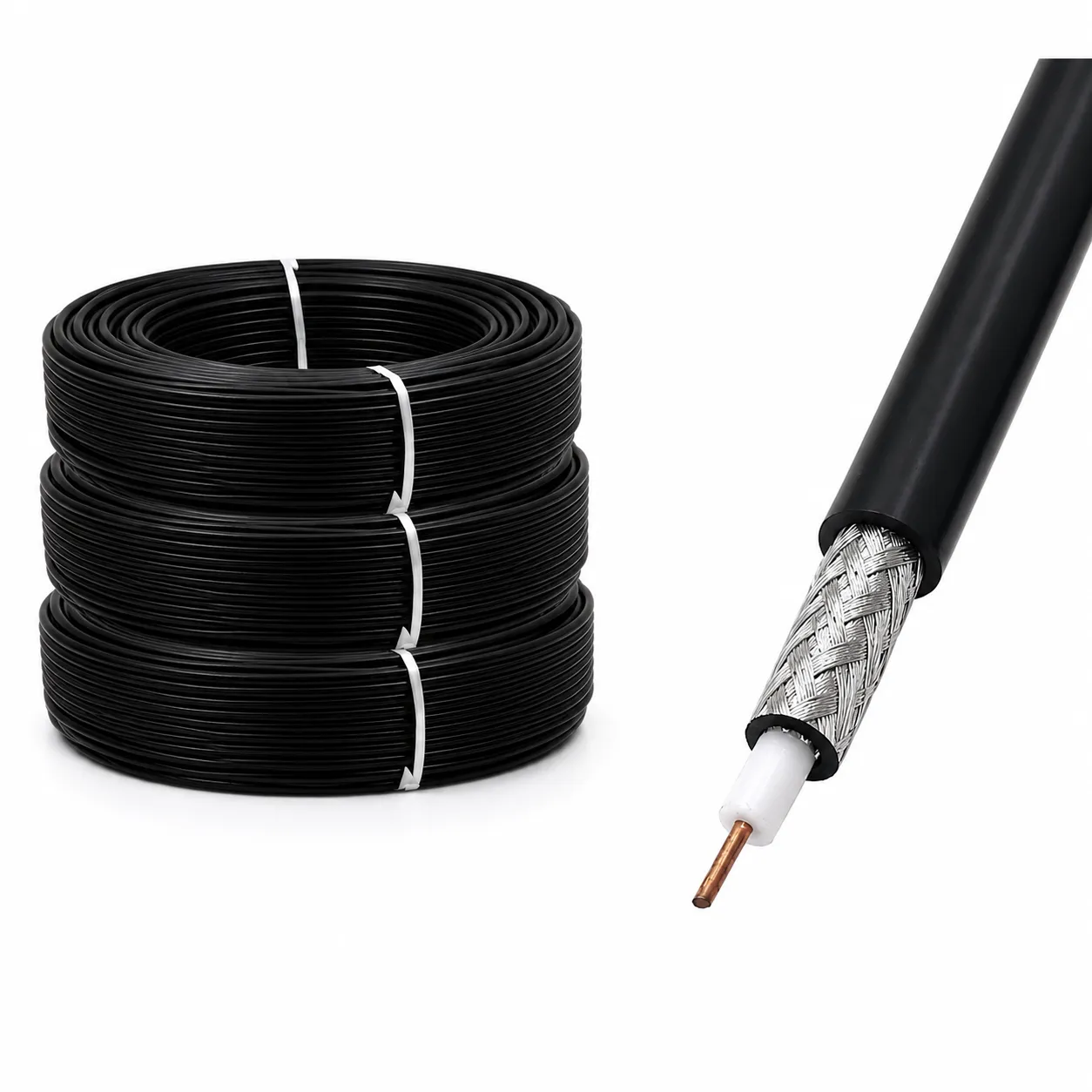
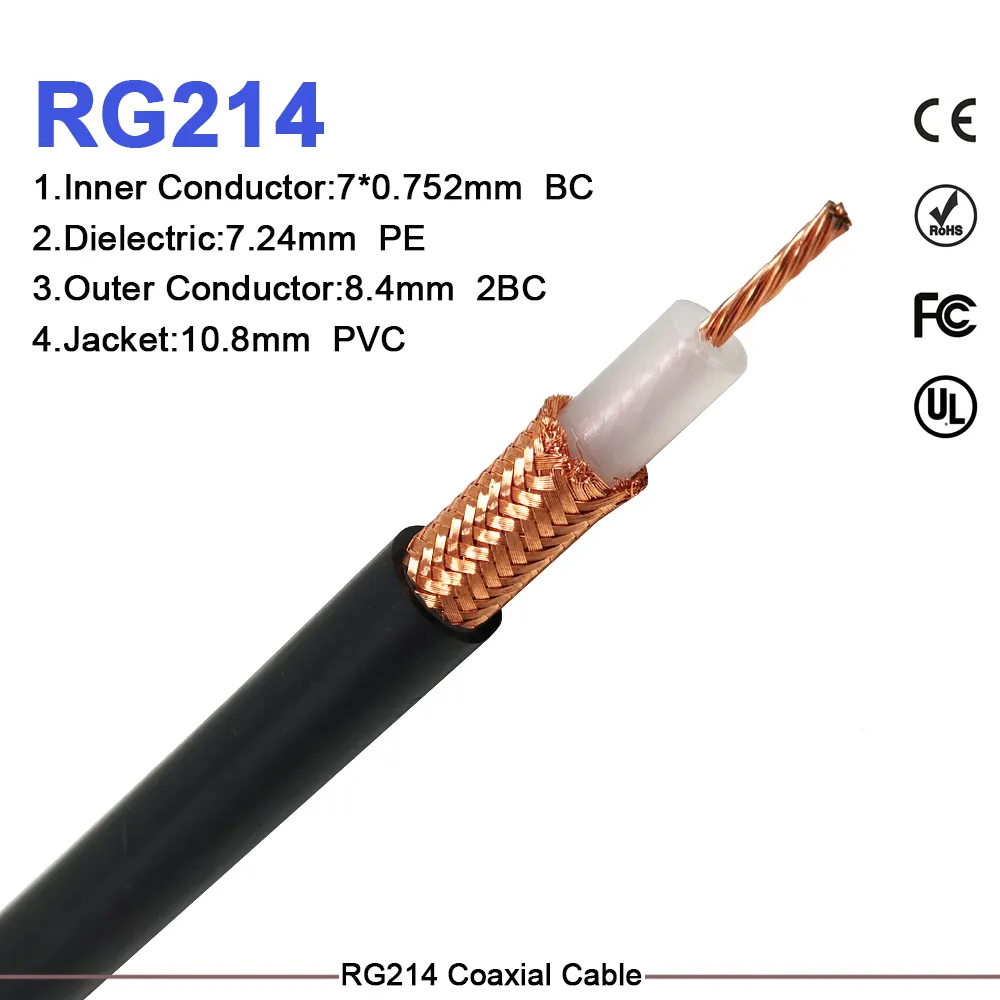
Understanding the structural design of an RF triaxial cable is essential for appreciating its superior performance in low-current and low-voltage signal transmission. Unlike standard coaxial configurations that consist of a single center conductor, a dielectric layer, and an outer braided shield, a high-quality RF triaxial cable incorporates a complex concentric multi-layer architecture.
At the core of every RF triaxial cable lies a high-conductivity center conductor responsible for carrying the primary signal. Surrounding this core is an inner dielectric insulator, followed immediately by an inner metallic shield or guard conductor. This inner shield is separated from the outer metallic braid by a secondary insulating jacket layer. Finally, a durable outer protective jacket encapsulates the entire RF triaxial cable, shielding it from environmental wear, chemical exposure, and mechanical abrasion. Within any professional deployment, this dual-shield configuration allows the inner shield of the RF triaxial cable to act as a driven guard, effectively eliminating leakage currents and ground loop interference that typically plague standard transmission cables.
Parameter Comparison: RF Triaxial Cable vs. Coaxial and Twinaxial Lines
To assist engineering teams in selecting the optimal transmission line architecture for specialized test benches, the table below compares key electrical and physical parameters of an RF triaxial cable against traditional coaxial and twinaxial transmission lines.
| Performance Parameter | RF Triaxial Cable | Standard Coaxial Cable | Twinaxial Cable |
| Shielding Architecture | Dual independent concentric shields | Single outer shield | Balanced dual inner conductors with single shield |
| Noise Rejection Capability | Exceptional (Utilizes guard-shield driving) | Moderate | Good for differential signals |
| Leakage Current Elimination | Near zero (Guard circuit neutralization) | Present in high-impedance setups | N/A (Differential configuration) |
| Primary Deployment Scopes | Semiconductor testing, medical probes, instrumentation | General RF broadcast, antenna feeds, video links | Digital data transmission, differential signaling |
| Termination Complexity | Requires specialized multi-pin connectors | Standard BNC/N connectors | Specialized twinax connectors |
Shielding Benefits and Noise Elimination in Precision Measurements
The primary operational advantage of deploying an RF triaxial cable stems from its advanced shielding and guarding capabilities. In ultra-sensitive measurements involving pico-amperes or micro-volts, stray capacitance and leakage currents between the center conductor and the outer shield can severely corrupt test data. By utilizing a properly terminated RF triaxial cable, engineers can connect the inner shield to a guard potential that closely tracks the voltage of the center conductor.
Because the voltage difference across the inner dielectric of the RF triaxial cable is virtually zero, leakage current is effectively eliminated. This makes the RF triaxial cable indispensable in semiconductor wafer probing, medical ECG/EEG monitoring equipment, and high-precision laboratory instruments. Furthermore, the outer shield of the RF triaxial cable provides robust protection against external electromagnetic interference (EMI) and radio frequency interference (RFI), ensuring that ambient electrical noise in industrial facilities never reaches the sensitive core signal carried within the RF triaxial cable.
Industrial Applications and Real-World Deployment Scenarios
The unique electrical properties of an RF triaxial cable make it a mandatory specification across diverse high-tech industries. In semiconductor manufacturing, automated test equipment (ATE) relies heavily on a specialized RF triaxial cable to perform accurate parametric testing on nanoscale integrated circuits without signal distortion.
In the medical sector, diagnostic imaging machinery and sensitive bio-potential monitoring equipment utilize a flexible RF triaxial cable to transmit faint biological signals cleanly without artifact interference. Additionally, aerospace research facilities and particle physics laboratories integrate a robust RF triaxial cable into sensor arrays and sensor telemetry loops where signal fidelity directly dictates experimental accuracy. Worldpeak ensures that every deployed RF triaxial cable meets rigorous electrical continuity and attenuation standards to support these mission-critical applications seamlessly.
Manufacturing Quality Control and Testing Protocols at Worldpeak
Manufacturing a high-reliability RF triaxial cable demands meticulous precision during wire drawing, dielectric extrusion, concentric braiding, and final jacketing. At Worldpeak RF Connectors, production quality is governed by strict ISO 9001 quality management protocols. Raw copper wire and shielding strands undergo exhaustive chemical analysis and tensile strength testing before entering the assembly floor.
During extrusion, advanced laser micrometer sensors continuously monitor dielectric wall thickness and concentricity to guarantee consistent characteristic impedance along every meter of the RF triaxial cable. Following assembly, 100% automated vector network analysis (VNA) and high-potential insulation resistance testing are performed to verify that shielding effectiveness of the RF triaxial cable exceeds industry benchmarks and that capacitance unbalance remains within ultra-tight tolerances. This unwavering commitment to quality ensures that every Worldpeak RF triaxial cable delivers flawless performance in the field.
Conclusion and Strategic Next Steps
In conclusion, mastering low-noise signal transmission requires an appreciation of advanced shielding topologies, precise grounding techniques, and rigorous manufacturing standards. Integrating a professionally engineered RF triaxial cable safeguards sensitive measurements, eliminates ground loop errors, and enhances overall system reliability across demanding scientific and industrial environments.
For further technical resources, architectural guidelines, and complete product catalogs, explore our core pillar guide on